

Our Insights. (Part 2)
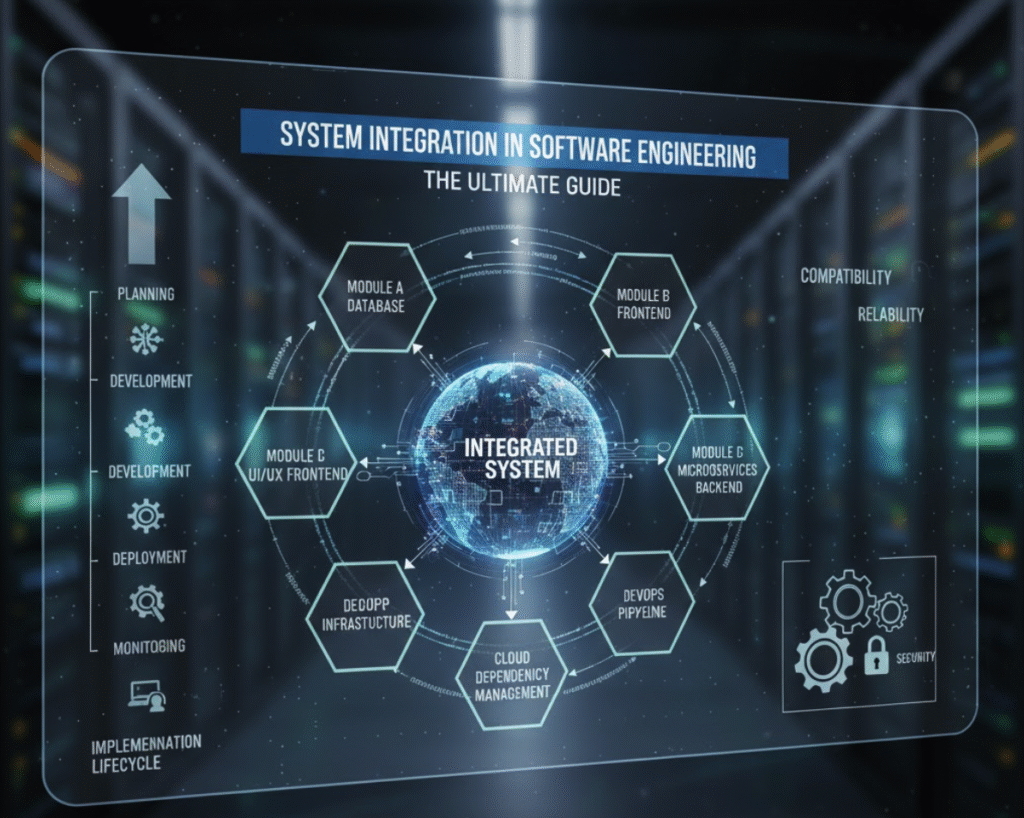
Nesia – The next Inspiration of Asia, In the world of software engineering, creating a brilliant, standalone application is only half the battle. The true power of modern technology is unlocked when different software systems can communicate, share data, and work together as a single, cohesive unit. Without this connection, even the most advanced software can become an isolated island of data—limiting its value and creating inefficiencies across an organization.
This is the challenge that system integration solves. It’s the art and science of weaving together disparate software components into a unified, functional whole. At Nesia Digital, we’ve seen firsthand how a strategic approach to system integration can transform a company’s operations. Through our specialized digital works, we help businesses break down digital barriers, automate workflows, and build a technological foundation that is truly greater than the sum of its parts.
This guide will explore what system integration is, why it’s essential, the methods and strategies available, and how organizations can successfully implement it to amplify success in today’s digital-first economy.
What Exactly is System Integration?
At its core, system integration is the process of linking different IT systems, services, and software applications so they can act as one coordinated ecosystem. In software engineering, this means ensuring that individual software modules, third-party applications, and even legacy systems can exchange data and trigger processes in one another seamlessly.
Think of it like building a custom car. You might source the engine from one manufacturer, the transmission from another, and the onboard computer from a third. Each component is a masterpiece of engineering on its own—but they are useless until they are integrated. A software engineer’s role is like that of a master mechanic, designing the connections and interfaces that allow the engine to power the transmission and the computer to monitor everything in harmony.
The ultimate goal of integration is to create a seamless flow of information and functionality across the entire IT landscape. This eliminates redundant tasks such as manual data entry, reduces the risk of errors, and ensures that data updated in one application is automatically reflected in others.
Why Integration is a Cornerstone of Modern Software Engineering?
In the past, many companies relied on a single, monolithic piece of software to run their entire operations. Today, the situation has changed dramatically. Modern businesses typically use a technology stack made up of specialized, best-in-class applications for different functions—CRM, ERP, marketing automation, HR platforms, analytics tools, and more.
System integration is the critical discipline that allows these systems to work together effectively. Here are some of its biggest benefits:
1. Creates a Single Source of Truth
Integration eliminates data silos by syncing information across platforms. Everyone in the organization has access to accurate, up-to-date data, which reduces errors and empowers better decision-making.
2. Boosts Productivity and Efficiency
Automation is a direct outcome of integration. Imagine your sales software automatically updating your inventory system, or your e-commerce platform syncing transactions with your accounting software. This reduces countless hours of manual work and frees your team to focus on strategic growth.
3. Improves Customer Experience
Customers expect fast, personalized service. By integrating CRM with customer support, marketing, and e-commerce systems, companies gain a unified view of each customer journey. This enables personalized communication, faster resolutions, and higher satisfaction.
4. Enhances Agility and Scalability
A well-integrated architecture is modular, meaning businesses can add, replace, or scale software components without having to rebuild the entire system. This flexibility is essential for growing companies and adapting to changing market needs.
5. Strengthens Security and Compliance
Proper integration ensures secure data flows, audit trails, and compliance with standards such as GDPR or CCPA. Instead of fragmented security controls, integrated systems can provide centralized oversight.
Common Methods and Strategies for System Integration
Software engineers use a variety of proven approaches to connect systems. The choice depends on factors such as the number of systems, data complexity, scalability needs, and business goals.
1. Point-to-Point Integration
The simplest method, creating direct connections between two applications. While fast to implement, this approach becomes unmanageable as systems multiply, leading to the notorious “spaghetti architecture.”
2. Star Integration (Hub-and-Spoke)
Here, a centralized hub connects to all other applications (spokes). The hub manages translation and routing of data, reducing complexity compared to point-to-point setups. However, the hub can become a bottleneck if not properly designed.
3. Enterprise Service Bus (ESB)
A more advanced hub-and-spoke model, the ESB acts as a communication backbone. It enables complex data transformation, routing, and protocol conversion while decoupling applications from one another. This means one system can be updated or replaced without disrupting the rest.
4. API-Led Integration
Today’s most popular approach. Application Programming Interfaces (APIs) provide standardized ways for applications to communicate. Most SaaS platforms now offer robust APIs, enabling engineers to build flexible, scalable, and secure integrations. API-led approaches power modern cloud ecosystems and microservice architectures.
5. iPaaS (Integration Platform as a Service)
An emerging trend, iPaaS solutions (like MuleSoft, Boomi, or Zapier) provide cloud-based platforms that manage integrations for you. They offer pre-built connectors, scalability, and lower maintenance, making integration accessible even for companies without deep technical expertise.
The Integration Process: Step by Step
A successful integration project requires more than just connecting systems—it requires strategy, planning, and continuous maintenance. Here’s a typical roadmap:
- Requirements Gathering – Define business needs and identify which workflows should be automated.
- Analysis and Design – Evaluate system capabilities, APIs, and data structures. Choose the best integration method (API, ESB, iPaaS, etc.).
- Development & Implementation – Write code, configure connectors, and build the integration logic.
- Testing – Test data flow, performance, and error handling to ensure security and reliability.
- Deployment & Maintenance – Roll out the integration into production and continuously monitor for changes in APIs, system updates, or new requirements.
Common Challenges in System Integration
While the benefits are enormous, integration projects are not without hurdles:
- Legacy Systems: Older software may lack APIs, requiring workarounds such as middleware or custom connectors.
- Data Inconsistency: Different systems may store data in varying formats, making mapping and transformation complex.
- Security Risks: Moving data between systems increases exposure. Encryption, authentication, and monitoring are essential.
- Scalability Issues: Poorly designed integrations may work initially but fail as the business grows.
- Maintenance Overhead: APIs change, systems update, and new applications are added—ongoing support is mandatory.
Partnering with an experienced integration team helps mitigate these risks and ensures projects deliver long-term value.
Future of System Integration: What’s Next?
The integration landscape continues to evolve alongside digital transformation. Key trends include:
- Event-Driven Architectures – Instead of relying on scheduled syncs, systems now react in real time to business events.
- AI-Powered Integrations – Machine learning is increasingly being used to automate data mapping, error detection, and predictive workflows.
- Cloud-Native iPaaS – More organizations are adopting low-code/no-code integration platforms to accelerate innovation.
- Edge Integration – With IoT devices proliferating, integration at the edge (closer to the data source) is becoming critical.
These trends highlight that integration is not static—it’s a continuous discipline that grows in importance as organizations digitize further.
Conclusion: Integrate Your Systems, Amplify Your Success
In modern software engineering, system integration is not an afterthought—it is a core strategic discipline. It’s the essential glue that holds the digital enterprise together, transforming a collection of disconnected tools into a powerful, automated, and intelligent ecosystem.
By enabling seamless data flows, integration drives efficiency, delivers critical insights, enhances customer experiences, and prepares businesses to scale with agility.
Don’t let disconnected systems hold your business back. It’s time to build bridges between your applications and unlock their full potential. At Nesia Digital, we specialize in expert digital works that make seamless integration a reality. From strategy and design to implementation and support, our team can help you build a more connected and efficient future.
Visit our Digital Works page today to discover how we can help you design and implement a robust integration strategy tailored to your unique business needs.